Pet fashion has evolved far beyond basic functionality. What was once purely practical—like a dog harness—is now an extension of personal style, brand identity, and even lifestyle storytelling. In this shift toward design-led products, one pattern has quietly but powerfully returned to the spotlight: plaid.
The plaid dog harness is no longer just a nostalgic nod to tradition. In 2026, it represents a convergence of timeless design and modern consumer expectations. Pet brands across global markets are rediscovering plaid as a way to create products that feel familiar yet refined, classic yet commercially relevant.
Understanding why plaid is trending again—and how to translate it into a successful product line—can offer a significant competitive advantage.
The Comeback of a Classic Pattern
Trends in pet fashion are increasingly influenced by broader movements in human apparel. Over the past few seasons, plaid has re-emerged in fashion collections, particularly in fall and winter lines, where heritage patterns and textured fabrics dominate. This influence has naturally extended into the pet category, where owners are looking for products that visually align with their own wardrobes.
What makes plaid particularly powerful is its longevity. Unlike graphic prints that can quickly feel dated, plaid carries a sense of continuity. It has been reinvented countless times across decades, yet it never loses relevance. For pet brands, this creates a rare opportunity: to develop products that are both trend-aware and resistant to rapid obsolescence.
At the same time, consumers are becoming more intentional in their purchasing decisions. They are drawn to products that feel thoughtfully designed rather than mass-produced. Plaid, with its structured geometry and layered color combinations, communicates craftsmanship in a way that simpler fabrics often cannot.
Why Plaid Works So Well for Dog Harnesses
A dog harness sits at the intersection of utility and visibility. It must perform reliably, but it is also one of the most visually prominent accessories a dog wears. This dual role makes it an ideal canvas for design.
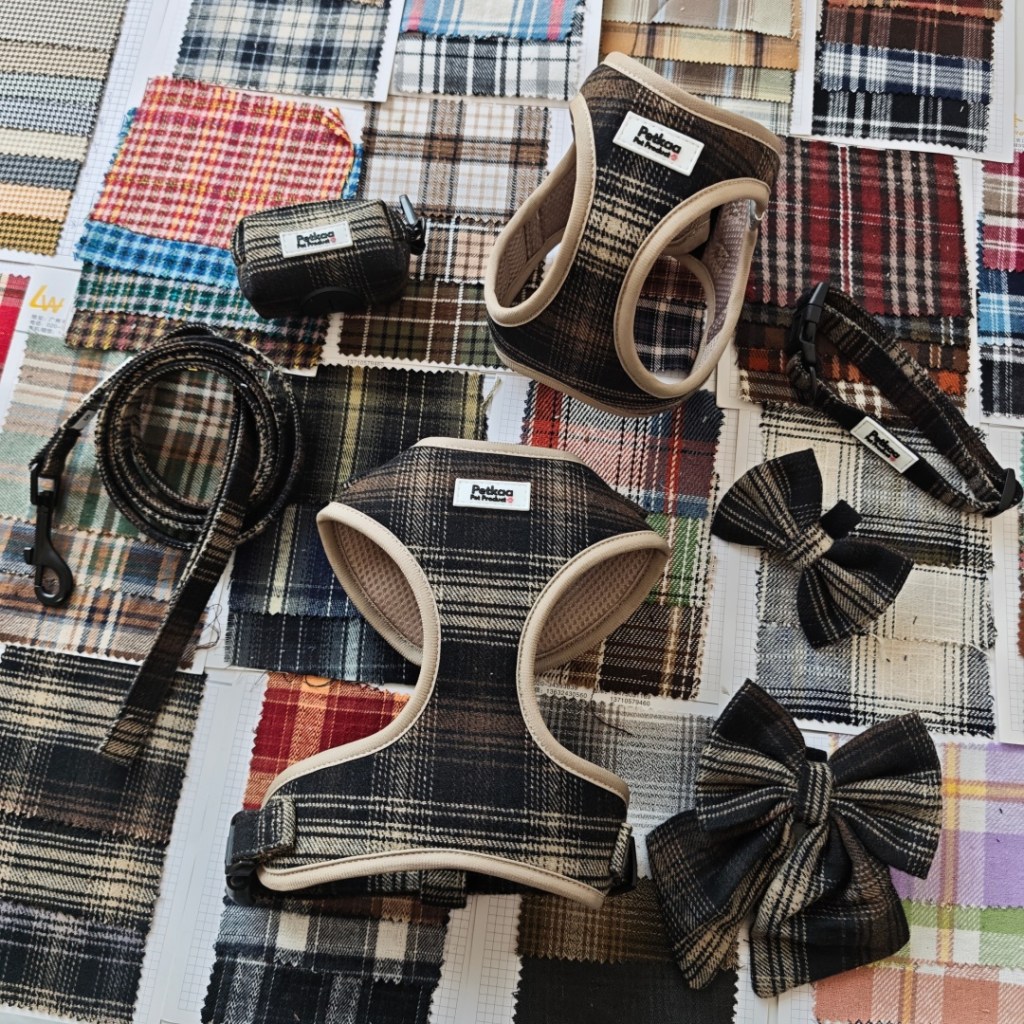
Plaid works particularly well in this context because it adds visual depth without overwhelming the product. The pattern creates interest from a distance, while still maintaining a balanced, cohesive look up close. When paired with neutral trims—such as beige edging or matte black hardware—it can elevate the entire product into a more premium category.
There is also a psychological dimension at play. Plaid evokes familiarity and warmth. It is associated with heritage, comfort, and everyday sophistication. For pet owners, these associations translate into emotional appeal, making the product feel both stylish and approachable.
From a commercial standpoint, this combination is valuable. Products that are easy to understand, easy to style, and easy to photograph tend to perform better across eCommerce platforms and social media channels.
From Pattern to Product: Design That Actually Works
While plaid may appear straightforward, executing it well on a dog harness requires a high level of attention to detail. Pattern alignment, for instance, plays a critical role in perceived quality. Misaligned grids or inconsistent seam transitions can quickly undermine the visual integrity of the design.
Material selection is equally important. A successful plaid harness typically combines an outer fabric that showcases the pattern with an inner layer designed for comfort, such as breathable mesh. The edge binding, often overlooked, can either enhance or detract from the overall aesthetic depending on how well it complements the base colors.
Beyond appearance, structure cannot be compromised. A well-designed harness must distribute pressure evenly, allow for adjustability, and remain lightweight enough for daily use. The most successful products are those that seamlessly integrate these functional requirements with strong visual identity, rather than treating them as separate considerations.
Building a Collection, Not Just a Product
One of the most notable shifts in the pet accessories market is the move from standalone products to cohesive collections. A single plaid dog harness can capture attention, but a coordinated set—featuring matching leashes, collars, and accessories—creates a much stronger brand presence.
This approach not only enhances visual consistency but also increases the overall value of each customer transaction. When products are designed to work together, customers are more likely to purchase multiple items, reinforcing both revenue and brand loyalty.
Plaid is particularly well-suited for this strategy. Its structured pattern allows it to be easily adapted across different product formats without losing coherence. This makes it an ideal foundation for building scalable product lines.
Customization as a Competitive Strategy
As the market becomes more saturated, relying on generic, off-the-shelf designs is increasingly limiting. Customization has emerged as a key differentiator, allowing brands to create products that feel exclusive rather than interchangeable.
With plaid, customization goes beyond simply choosing a pattern. It can involve adjusting color palettes to match brand identity, refining grid proportions for a more modern look, or developing entirely unique fabric variations. These subtle changes can significantly impact how a product is perceived in the market.
For emerging brands, this level of differentiation can be the difference between blending in and standing out. For established brands, it offers a way to continuously refresh collections without losing their core identity.
The Role of the Right Manufacturing Partner
Translating a design concept into a commercially successful product requires more than creativity. It requires technical expertise, production precision, and a deep understanding of both materials and construction.
A capable manufacturing partner plays a critical role in this process. From fabric development to sampling and final production, each stage influences the outcome. Fast and accurate sampling allows brands to iterate quickly, while flexible production capabilities make it easier to test new ideas without excessive risk.
Equally important is the ability to provide end-to-end support. In a fast-moving market, brands benefit from partners who can streamline the entire process—from initial concept development to global delivery—reducing complexity and accelerating time to market.
Conclusion: Turning a Timeless Pattern into a Modern Opportunity
The resurgence of plaid in pet fashion is not simply a matter of nostalgia. It reflects a broader shift toward products that combine aesthetic value with everyday usability. For pet brands, this presents a compelling opportunity to create collections that resonate with modern consumers while maintaining long-term relevance.
However, success in this space depends on execution. A well-designed plaid dog harness must balance pattern, material, structure, and brand positioning in a way that feels cohesive and intentional.
Develop Your Plaid Dog Harness Collection with an Experienced Partner
As a dedicated pet harness manufacturer, we work closely with brands to turn design concepts into fully realized products. Our approach goes beyond production—we support the entire development journey.
With access to a wide range of plaid fabric options, efficient sampling capabilities, and flexible production solutions, we help brands bring unique collections to market with confidence. From early-stage design to final delivery, our goal is to provide a seamless, end-to-end experience that enables you to focus on building your brand.
If you are looking to create a distinctive plaid dog harness collection that stands out in today’s competitive market, we are here to support you at every step.
👉 Ready to develop your next pet fashion collection?
Get in touch with us today.


- Plaid Dog Harness: Why Classic Patterns Are Back in Pet FashionPet fashion has transformed from basic functionality to stylish expressions of identity, with plaid re-emerging as a significant trend in 2026. This timeless pattern resonates with consumers seeking thoughtful design and emotional connection. Pet brands can leverage plaid for cohesive collections, customization, and effective manufacturing to meet modern market demands and enhance brand loyalty.
- 2026 Pup Fashion Trends: What’s Next in Pet Style & Product DesignThe pet accessories market is evolving, with 2026 anticipated as a pivotal year for dog fashion. Key trends include the use of textured materials, coordinated accessory sets, and a blend of minimal, functional designs. Brands should focus on premium materials, customization, and comfort to enhance their offerings and appeal to modern pet owners.
- Jacquard Fabric Pet Harness: A Rising Trend in Premium Pet AccessoriesThe pet accessories market is embracing jacquard fabric for harnesses, collars, and leashes, providing a stylish and premium look. This woven texture caters to the trend of coordinated accessory sets and diverse patterns. Brands are leveraging jacquard’s visual appeal and structure to differentiate their products in a competitive landscape.
 Petkaa