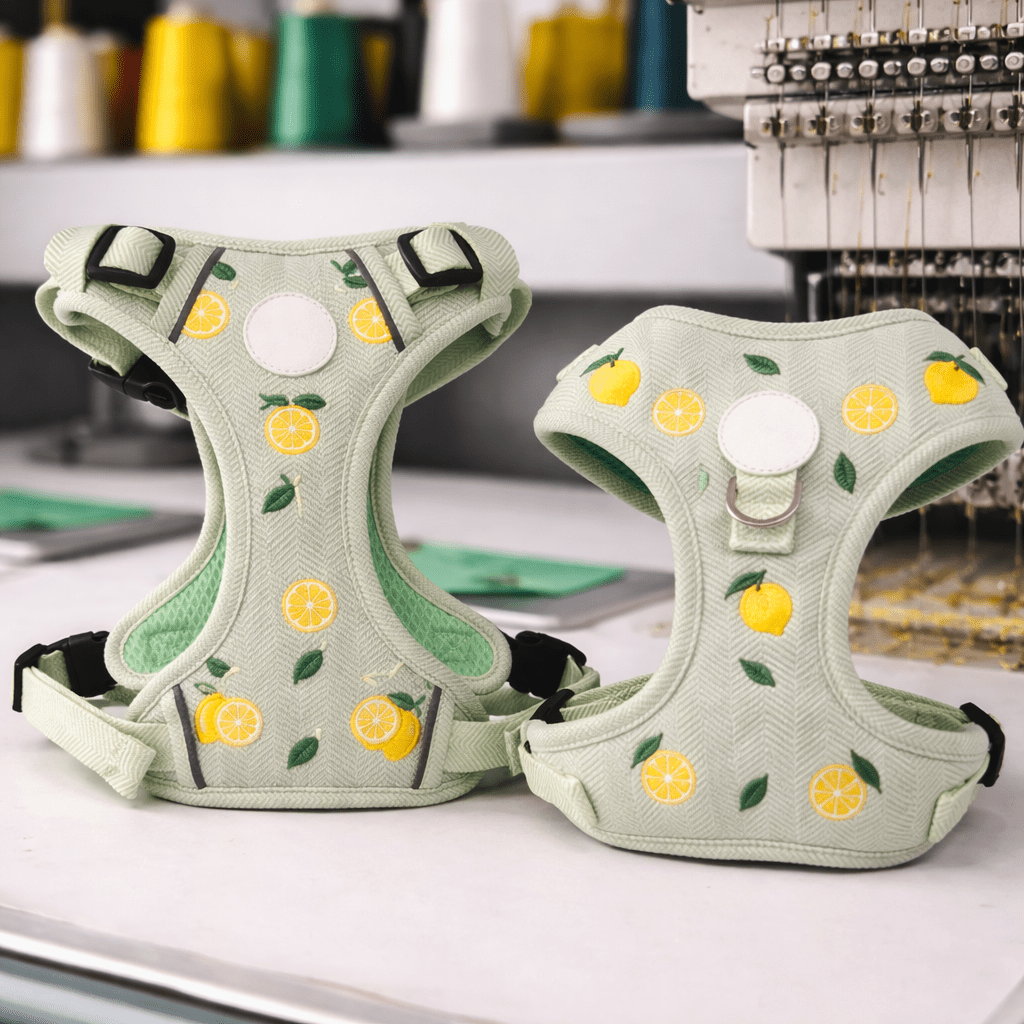
Every product starts with an idea—but turning that idea into something real is where most brands get stuck. This is especially true for embroidered dog harnesses, where design, material, and production techniques all need to come together seamlessly to achieve a premium result.
In this case study, we walk through how a simple concept evolved into a fully developed embroidered harness, and how the right manufacturing partner can turn creative ideas into market-ready products—efficiently, reliably, and with flexibility for growing brands.
The Starting Point: A Simple Idea
The project began with a small but ambitious goal.
The client, an emerging pet brand, wanted to create a harness that felt more premium than typical market offerings. Instead of using printed graphics, they envisioned a clean, minimal design featuring a subtle embroidered logo.
They had:
- A rough logo concept
- A general color direction
- No technical drawings or production experience
What they needed was not just a manufacturer, but a partner who could translate their idea into a workable product.
Step 1: Turning Concepts into Feasible Designs
The first step was to evaluate the idea from a production perspective.
Embroidery on a dog harness is not as simple as placing a logo onto fabric. Factors such as placement, size, stitch density, and fabric stability all influence the final result.
We worked closely with the client to:
- Refine logo size and positioning
- Recommend suitable harness panels for embroidery
- Adjust design details to ensure clarity after stitching
At this stage, our role was not just to execute—but to guide. Many early-stage brands are unfamiliar with the technical limitations of embroidery, and small adjustments here can make a significant difference in the final product quality.
Step 2: Material Selection & Structure Planning
Once the design direction was confirmed, we moved into material selection.
For embroidered harnesses, the base fabric must strike a balance between:
- Structural stability (to support embroidery)
- Comfort (for daily wear)
- Visual compatibility with the design
We proposed a combination of:
- Durable outer fabric suitable for embroidery
- Breathable mesh lining for comfort
- Color-matched binding and hardware for a cohesive look
At the same time, we ensured that the harness structure remained fully functional, with adjustable straps and a secure, ergonomic fit.
Step 3: Sampling & Embroidery Development
Sampling is where ideas become real—and where many challenges surface.
Embroidery requires digitization, where the design is converted into stitch data. This step directly affects:
- Stitch accuracy
- Texture and depth
- Overall visual quality
We produced initial samples for the client, allowing them to:
- Review embroidery quality
- Test color combinations
- Evaluate fit and structure
Based on feedback, we made several refinements to improve clarity and balance. This iterative process is essential for achieving a final product that meets both aesthetic and functional expectations.
Thanks to our streamlined sampling process, the client was able to move quickly without long delays—something that is especially important for brands preparing for product launches.
Step 4: Overcoming MOQ Barriers
One of the client’s biggest concerns was minimum order quantity.
Traditionally, embroidered products require higher MOQs due to setup costs. This often makes it difficult for smaller brands to test new ideas or launch niche collections.
To address this, we offered a more flexible production solution.
By optimizing our workflow and embroidery processes, we were able to support:
- Lower MOQs suitable for emerging brands
- Efficient small-batch production
- Consistent quality across runs
This allowed the client to launch confidently without overcommitting to inventory.
Step 5: Production & Final Delivery
Once the sample was approved, we moved into full production.
At this stage, consistency becomes critical. Every detail—from stitching to hardware—must match the approved sample.
Our quality control process ensures:
- Accurate embroidery execution
- Durable construction
- Clean finishing and packaging
After production, the products were prepared for international shipping, completing the journey from concept to market-ready inventory.
The Result: A Product That Stands Out
The final embroidered dog harness achieved exactly what the client set out to do.
It offered:
- A premium, textured look
- Strong brand identity through subtle embroidery
- Reliable performance for everyday use
More importantly, it gave the brand a product that felt unique—something that could not be easily replicated by competitors using off-the-shelf designs.
What This Means for Your Brand
This case is not unique. More and more pet brands are looking to develop custom products that go beyond basic designs.
However, the gap between idea and execution can be significant—especially when working with techniques like embroidery.
That’s where having the right partner matters.
Develop Your Own Embroidered Dog Harness Collection
As a professional pet harness manufacturer, we specialize in helping brands turn ideas into fully developed products.
Whether you’re starting with a simple concept or a more detailed design, we provide support at every stage:
- Design evaluation and development guidance
- Embroidery feasibility and optimization
- Fast and efficient sampling
- Low MOQ options for flexible production
- Full OEM & ODM services
- End-to-end support from concept to delivery
Our goal is to make custom product development more accessible—especially for growing brands that need flexibility without compromising on quality.
Conclusion
Developing an embroidered dog harness doesn’t have to be complicated—but it does require the right expertise.
With the right approach and the right partner, even a simple idea can become a distinctive, market-ready product.
If you’re planning your next collection and want to explore embroidery, now is the perfect time to start.
👉 Get in touch with us to bring your ideas to life.


- Custom Embroidered Dog Harness: How We Help Brands Go from Idea to ProductionThis case study highlights the journey of an emerging pet brand transforming a simple concept into a premium embroidered dog harness. It emphasizes the importance of selecting the right manufacturing partner to navigate challenges from design to production, including material selection and minimizing order quantities, ultimately delivering a unique, market-ready product.
- Embroidered Dog Harness: The Next Big Trend in Custom Pet AccessoriesThe pet industry is evolving towards customization, with embroidered dog harnesses becoming a prominent trend. This shift reflects consumer demand for aesthetic and quality-driven products, as embroidery offers durability and visual appeal. Brands can differentiate themselves and enhance perceived value by transitioning from printed to embroidered designs, despite challenges like high minimum order quantities.
- Plaid Dog Harness: Why Classic Patterns Are Back in Pet FashionPet fashion has transformed from basic functionality to stylish expressions of identity, with plaid re-emerging as a significant trend in 2026. This timeless pattern resonates with consumers seeking thoughtful design and emotional connection. Pet brands can leverage plaid for cohesive collections, customization, and effective manufacturing to meet modern market demands and enhance brand loyalty.
 Petkaa