Pet Fashion: What’s the Timeline for Launching Seasonal Pet Products?
For many pet brands, seasonal collections are an important part of the annual sales calendar. A new spring dog harness collection, lightweight summer pet accessories, autumn and winter dog apparel, Halloween-themed collars, or Christmas dog sweaters can create fresh reasons for customers to shop.
But there is one question that pet brands often overlook:
When should you actually start preparing these products?
The answer is usually much earlier than you might think.
When customers start searching for winter dog clothes, your winter collection should already be in production or on its way to your warehouse. When Halloween approaches, your themed dog harnesses and pet accessories should already be ready for sale. And by the time customers begin thinking about Christmas, your festive dog apparel should ideally already be photographed, listed online and included in your marketing campaigns.
For brands developing custom or private label pet products, seasonal planning needs to start even earlier. Product design, material sourcing, sampling, production, shipping and marketing all take time. The safest approach is to start with your target selling season and work backward.
Why Seasonal Pet Fashion Needs Early Planning
Seasonal pet fashion is different from evergreen products.
A basic dog harness or dog collar may sell throughout the year, but seasonal products often have a much shorter selling window. A Christmas dog sweater that arrives in January may have little commercial value, even if the product itself is excellent.
This makes timing just as important as product quality.
For a custom pet fashion collection, the process can include trend research, product selection, design development, material sourcing, sampling, testing, production, shipping, product photography and marketing. Depending on the complexity of the products, this process can take several months.
For example, a simple customized dog collar may require less development time than a completely new dog harness or a collection of dog apparel using custom fabrics and prints.
This is why successful seasonal planning is not about asking, “When does the season begin?” Instead, ask:
“When do we need the products to be ready for customers?”
Then work backward from that date.
Spring Pet Fashion: Start Planning in Autumn
Spring is often associated with lighter colors, floral patterns, fresh prints and lightweight pet accessories. For pet brands, this can be a good opportunity to refresh their product range after the winter season.
Popular spring collections may include floral dog harnesses, pastel-colored dog collars, lightweight pet harnesses, matching leashes and other fresh-looking pet accessories. Some brands may also introduce lightweight dog clothes or transitional apparel for cooler spring weather.
Although customers may start shopping for spring products around February or March, brands should ideally begin planning several months earlier.
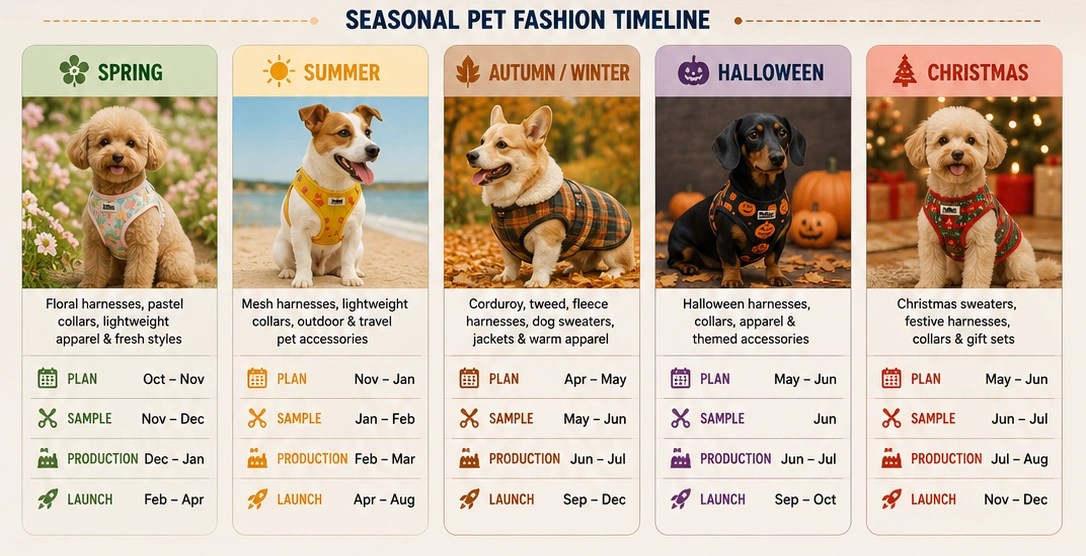
A practical timeline is to start trend research and product planning around October or November of the previous year. Design development and sampling can then take place in November and December, followed by production around December or January. This leaves time for shipping, product photography and marketing before the spring collection officially launches.
Starting early also gives brands more flexibility. If a sample needs to be adjusted, a fabric needs to be replaced or a color needs to be changed, there is still enough time to make the improvement without missing the season.
Summer Pet Products: Prepare Before the Weather Changes
Summer brings a different set of requirements for pet fashion. Lightweight and breathable materials become more important, particularly for dog harnesses, dog collars and everyday walking accessories.
Depending on the market, summer collections may include breathable mesh dog harnesses, lightweight pet harnesses, quick-drying materials, outdoor walking accessories and travel-related pet products. Bright colors, playful prints and vacation-inspired designs can also become part of a summer collection.
The mistake some brands make is waiting until the weather becomes warm before looking for summer products.
By then, the collection may already be too late.
For a summer launch between April and August, planning can begin from November through January. Sampling can follow in January or February, with production taking place around February or March. Shipping, photography and marketing can then be completed before the main selling period begins.
For custom pet products, allowing additional time is particularly important if the collection requires custom printing, special fabrics, new colors or customized branding.
Autumn and Winter Pet Fashion: Start Earlier Than You Think
Autumn and winter are particularly important seasons for pet fashion because they create opportunities for products that are visually distinctive and more seasonal.
This is the time when pet brands can introduce corduroy, velvet, tweed, plaid, fleece, teddy and sherpa materials across products such as pet harnesses, dog collars, dog apparel and matching accessories.
Dog sweaters, dog jackets, dog coats and other warm dog clothes also become increasingly relevant as temperatures drop.
However, autumn and winter collections often require more development than simple seasonal color changes. Different fabrics have different weights, textures and construction requirements, and dog apparel may require additional fitting and testing.
For a collection intended to launch around September or October, a good starting point is April or May. Trend research, fabric sourcing and product planning can begin during this period, followed by design and sampling in May and June. Bulk production can then be scheduled around June or July, leaving July and August for shipping, photography and marketing.
In other words:
For autumn and winter pet fashion, summer is already production season.
Waiting until September to start developing a winter collection means competing with the season instead of preparing for it.
Halloween Pet Fashion: A Short Selling Window
Halloween is another important seasonal opportunity for pet brands, particularly in markets where pet owners enjoy dressing their dogs for seasonal events.
Halloween collections can include themed dog harnesses, dog collars, dog clothes, leashes and other pet accessories. Pumpkin patterns, spooky graphics, black and orange color combinations and playful Halloween prints can be adapted across a coordinated collection.
However, Halloween products have one major challenge: the selling window is short.
A product designed specifically for Halloween may only have strong demand for several weeks. This means forecasting and timing are extremely important.
For a September or October launch, brands can start product planning around May or June. Sampling can follow in June, with production during June or July and shipping completed before the main marketing period begins.
Because the selling window is short, brands should also be careful about inventory. Ordering more products does not necessarily mean making more profit. For seasonal collections, accurate forecasting is often more valuable than simply carrying large amounts of stock.
Christmas Pet Fashion: Your Christmas Collection Starts in Summer
Christmas is one of the biggest seasonal opportunities for many pet brands, and it is also one of the easiest seasons to prepare too late for.
Customers may only start actively shopping for Christmas dog sweaters, festive dog clothes and Christmas pet accessories in November. But brands need to start much earlier.
A Christmas collection can include festive dog harnesses, Christmas dog collars, dog sweaters, dog apparel, matching leash and harness sets, seasonal accessories and gift-oriented products.
For custom or private label Christmas products, May or June is a good time to begin developing the collection. Sampling can take place in June or July, followed by bulk production in July or August. Shipping can then be completed around August or September, giving the brand time to prepare product photography, website listings, social media campaigns and retailer outreach before the holiday shopping season begins.
A simple rule is worth remembering:
If you start preparing your Christmas pet collection in November, you are already late.
The goal is not necessarily to have every Christmas product available six months in advance. The goal is to give yourself enough time to develop, manufacture and market the collection without rushing.
A Practical Seasonal Pet Fashion Timeline
While every brand has different production requirements, the following timeline can serve as a useful starting point:
| Collection | Typical Selling Period | Recommended Planning | Sampling | Production |
|---|---|---|---|---|
| Spring Pet Fashion | February–April | October–November | November–December | December–January |
| Summer Pet Fashion | April–August | November–January | January–February | February–March |
| Autumn/Winter Pet Fashion | September–December | April–May | May–June | June–July |
| Halloween Collection | September–October | May–June | June | June–July |
| Christmas Collection | November–December | May–June | June–July | July–August |
These are planning guidelines rather than fixed rules. A ready-to-order product may require considerably less time, while a completely new custom dog harness, complex dog apparel design or collection using custom fabrics may require several additional months.
How Early Should You Start With Custom Pet Products?
The more customization involved, the earlier a pet brand should begin.
For ready-to-order pet accessories or existing product styles with simple branding, two to three months may be sufficient in some cases. For custom pet products involving new colors, custom prints, customized labels or design changes, three to five months is a safer planning window.
Completely new product designs may require four to six months or more, particularly when the development involves new construction, custom materials, special hardware or multiple rounds of sampling.
For example, developing a new dog harness is not simply a matter of choosing a fabric. The brand may need to consider fit, sizing, webbing, buckles, D-rings, adjustment points, comfort and durability before the final product is approved.
The same applies to dog apparel. A dog sweater or dog jacket needs to balance appearance, material selection and fit, while also making sure the product is practical for everyday use.
This is why it is useful to discuss seasonal plans with your pet product manufacturer before you are ready to place the final order.
Your Supplier Can Affect Your Seasonal Launch
Seasonal product launches put pressure on every part of the supply chain.
A delayed design can delay sampling. A delayed sample can push back production. A production delay can affect shipping, and a late shipment can mean that a brand misses the most important part of the selling season.
This is where a reliable long-term pet product supplier can make a real difference.
A good manufacturing partner should not only produce the products after receiving an order. They can also become part of the planning process by helping brands evaluate materials, develop new pet fashion styles, arrange samples, plan production and prepare future collections.
For long-term customers, the relationship can become even more efficient. Once a supplier understands a brand’s preferred materials, sizing, colors, hardware and quality standards, communication becomes easier and product development can move faster.
This can be particularly valuable for brands developing multiple seasonal collections every year.
Instead of starting from zero for every new collection, both sides can build on previous products, customer feedback and production experience.
Plan Backward, Not Forward
The most important lesson when planning seasonal pet fashion is simple:
Do not start when the season arrives. Start by looking at when you want to launch.
If you want your Christmas dog sweaters to be available in November, your production should already be underway in summer. If you want your autumn dog harness collection ready in September, product development should probably begin in spring.
A useful way to plan is to work backward:
Launch date → Marketing → Shipping → Production → Sampling → Design → Product planning
This approach gives you room to make changes, solve unexpected production issues and prepare your marketing properly.
Seasonal pet fashion is not only about following trends. It is also about timing, planning and execution.
Whether you are developing a new dog harness, refreshing your dog collars, launching seasonal dog apparel or creating a complete private label pet accessories collection, starting early gives your brand more control.
The best time to prepare a seasonal pet fashion collection is not when customers start looking for it.
It is while you still have enough time to get it right.
Contact us to starting preparing for your next pet product collections!


- How Often Should Pet Brands Launch a New Collection?Launching new products is crucial for pet brands to maintain customer interest and market relevance. However, the frequency of launches should align with brand type and inventory capacity. Established brands may benefit from 2-4 major collections yearly, while fashion brands may require more frequent releases. Listening to customer feedback is vital for successful product development and launches.
- Pet Fashion: What’s the Timeline for Launching Seasonal Pet Products?Pet brands must plan seasonal product launches well in advance to meet customer demand effectively. Timing is crucial, particularly for short-selling windows like Halloween and Christmas. By starting product development several months before each season, brands can ensure quality, flexibility, and timely marketing, enhancing their overall success in the pet fashion market.
- Case Study: How a Small Pet Store Built Its Own Successful Pet BrandA small pet store transitioned from selling third-party brands to developing its own products, enabling greater control over pricing, inventory, and product design. This strategic shift fostered a brand identity that attracted customers and other retailers, turning the store into a growing pet brand. The journey emphasizes the importance of feedback and supplier relationships.

