For a growing pet brand, launching new products is one of the best ways to keep customers interested, create reasons to come back, and stay relevant in a fast-changing market.
But how often should a pet brand actually launch a new collection?
There is no universal answer. Launching a completely new product line every month may sound exciting, but it can quickly create inventory pressure, higher development costs, and unnecessary operational complexity. On the other hand, launching only once or twice a year may make a brand feel less active—especially in categories such as pet fashion and pet accessories, where colors, prints, materials, and seasonal trends change quickly.
The better approach is to build a structured product launch rhythm that matches your brand, customers, and inventory capacity.
There Is No “Perfect” Launch Frequency
A pet brand selling basic everyday products does not necessarily need to launch as frequently as a fashion-focused brand.
For example, a brand specializing in functional dog harnesses, dog collars and leashes may focus on improving existing bestsellers rather than constantly replacing them. A pet fashion brand selling dog clothes, dog sweaters and seasonal accessories, however, may benefit from more frequent collections.
As a general guideline:
- 2–4 major collections per year can work well for established brands.
- 4–6 seasonal or themed launches per year can keep a fashion-oriented pet brand fresh.
- Smaller monthly or bi-monthly drops can be added without requiring a completely new product range each time.
The key is that a new launch does not always have to mean a completely new product.
A new print, fabric, colorway, or matching accessory can create a fresh collection while using an existing and proven product construction.
Think in Collections, Not Individual Products
One of the biggest opportunities for pet brands is to stop thinking about products individually.
Instead of launching one dog harness, consider creating a complete collection around the same design language.
For example:
Printed Corduroy Collection
- Dog harness
- Dog collar
- Dog leash
- Poop bag holder
- Bow tie
- Bandana
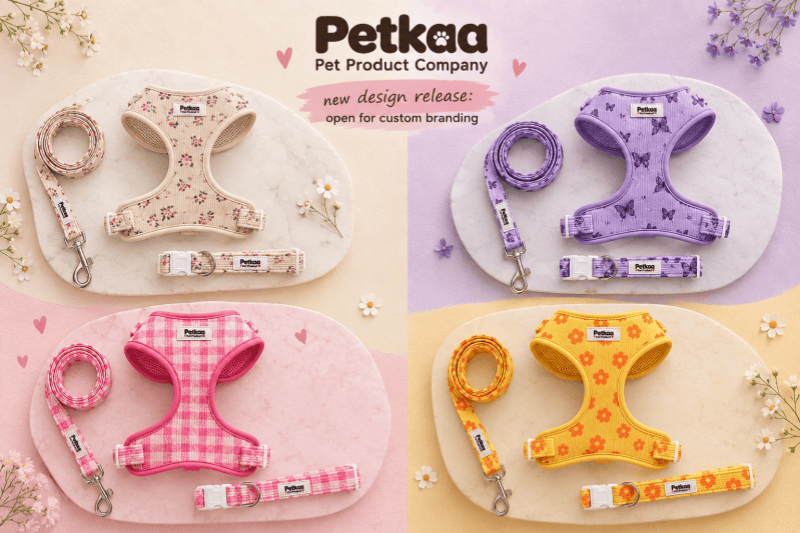
The same fabric, print, and color palette can be used across the collection. This creates a stronger visual identity and gives customers more opportunities to purchase matching products.
For a pet brand, this can also make content creation much easier. One product development project can generate product photography, social media content, website collections, email campaigns, and seasonal promotions.
Seasonal Launches Are Especially Important for Pet Fashion
Pet fashion naturally follows seasonal shopping behavior.
A practical annual launch calendar might look something like this:
Spring / Summer
Focus on lighter materials, fresh colors, playful prints and breathable designs.
Potential products include lightweight dog harnesses, collars, leashes, bandanas and pet apparel.
Fall / Winter
This is the time to introduce warmer materials and richer textures.
Think corduroy, fleece, teddy fabrics, quilted materials, sweaters and other dog clothes designed for colder weather.
Holiday
Christmas and other seasonal campaigns can introduce limited-edition colors, festive prints, giftable accessories and matching pet sets.
A collection does not need to stay on the market for an entire year. Seasonal products can create urgency while giving customers a reason to check back regularly.
Don’t Confuse “New” With “Completely Different”
This is an important point for smaller and growing pet brands.
You do not necessarily need to develop a completely new dog harness every few months.
If a particular harness construction already fits well, performs well and receives positive customer feedback, it may make more sense to keep the construction and introduce:
- New prints
- New fabrics
- New colors
- New logo treatments
- Seasonal patterns
- Matching accessories
- Limited-edition collections
This approach reduces development risk while still giving customers something new.
For example, an existing adjustable harness can become several different collections simply by changing the fabric and visual design.
This is especially useful for brands that are still learning which styles their customers prefer.
Use Customer Feedback to Decide What Comes Next
Your next collection should not be based only on what looks good on a mood board.
Look at what customers are already telling you.
Which products sell fastest?
Which sizes are most popular?
Which colors receive the most engagement?
Are customers asking for matching collars or leashes?
Do they want a lighter summer version?
Are customers complaining about fit, hardware, adjustability or material?
These insights can help you decide whether your next launch should be a completely new product or simply an improved version of an existing one.
For example, if your best-selling dog harness consistently receives requests for a matching leash, your next collection may not need a new harness at all. Adding the leash, collar and other accessories could create a more complete product line.
Smaller Drops Can Be Better for Growing Brands
For a new or small pet brand, large seasonal launches can be risky.
You may not yet know which prints will sell, which sizes will be most popular, or how quickly your customers will respond to a new design.
This is where low MOQ manufacturing can make a significant difference.
Instead of ordering thousands of units across many designs, a brand can test a smaller collection, collect customer feedback and then reorder the strongest performers.
A simple strategy could be:
Test → Launch → Measure → Reorder → Expand
This allows a brand to develop its product line based on actual market response rather than committing too much inventory upfront.
How Many New Styles Should You Launch?
The answer depends on your brand size and customer base, but more is not always better.
For a smaller brand, launching 3–5 coordinated styles can often be more effective than launching 20 unrelated products.
For example:
Collection A
3 harness designs
- matching collars
- matching leashes
- bandanas
This creates the feeling of a complete collection without requiring the brand to manage dozens of completely different products.
As the brand grows and sales data becomes more reliable, the number of styles can increase.
Your Manufacturer Can Be Part of Your Product Strategy
A good pet product manufacturer should do more than simply produce products after you provide a finished design.
For growing brands, a manufacturing partner can also become part of the product development process.
At Petkaa, we continuously develop new pet accessories and pet fashion based on new materials, prints, colors and market trends. Pet brands can select from our existing developments, customize their own colors and prints, add their branding, or use our existing constructions as a starting point for a new design.
This gives brands more flexibility to refresh their collections without starting every project completely from scratch.
From dog harnesses and dog collars to leashes, pet apparel, dog sweaters and matching accessories, a collection can be developed as a complete product concept rather than a group of unrelated items.
A Simple Product Launch Calendar for Pet Brands
If you are not sure where to start, consider a simple four-season structure:
Q1 — Spring Collection
Fresh colors, lightweight materials and new everyday accessories.
Q2 — Summer Collection
Breathable materials, bright prints and outdoor-focused products.
Q3 — Fall/Winter Collection
Corduroy, fleece, warmer fabrics and seasonal pet fashion.
Q4 — Holiday Collection
Festive prints, giftable accessories and limited-edition designs.
Between these major launches, you can introduce smaller product drops using new colors, prints or accessories.
This creates a steady flow of newness without forcing your team to develop an entirely new collection every month.
The Goal Isn’t to Launch More. It’s to Launch Better.
A successful pet brand does not need to constantly release new products just to appear active.
The goal is to create a product calendar that balances customer interest, product development, inventory investment and brand identity.
For some brands, that may mean four major collections a year. For others, it may mean smaller monthly drops built around a few proven products.
What matters most is consistency.
Keep listening to your customers. Watch what sells. Test new ideas on a manageable scale. Refresh successful products with new materials, prints and colors. And build collections that make it easy for customers to create a complete look for their pets.
Because in pet fashion, “new” doesn’t always mean starting from zero. Sometimes, the smartest new collection starts with a product you already know works.
Ready to Develop Your Next Pet Collection?
At Petkaa, we help pet brands develop and manufacture custom pet accessories, dog harnesses, collars, leashes and pet apparel with flexible MOQ, custom branding and development support.
Whether you have a finished design or simply an idea, we can help turn it into a complete product collection.
Have a new collection in mind? Contact Petkaa to discuss your next launch.


- How Often Should Pet Brands Launch a New Collection?Launching new products is crucial for pet brands to maintain customer interest and market relevance. However, the frequency of launches should align with brand type and inventory capacity. Established brands may benefit from 2-4 major collections yearly, while fashion brands may require more frequent releases. Listening to customer feedback is vital for successful product development and launches.
- Pet Fashion: What’s the Timeline for Launching Seasonal Pet Products?Pet brands must plan seasonal product launches well in advance to meet customer demand effectively. Timing is crucial, particularly for short-selling windows like Halloween and Christmas. By starting product development several months before each season, brands can ensure quality, flexibility, and timely marketing, enhancing their overall success in the pet fashion market.
- Case Study: How a Small Pet Store Built Its Own Successful Pet BrandA small pet store transitioned from selling third-party brands to developing its own products, enabling greater control over pricing, inventory, and product design. This strategic shift fostered a brand identity that attracted customers and other retailers, turning the store into a growing pet brand. The journey emphasizes the importance of feedback and supplier relationships.
 Petkaa